


Murray Chrysler Dodge Jeep Ram of Starke

Blog

The History of the Dodge Super Bee: From 1968 to 2027

super bee wheel

Few names in American performance history generate as much excitement as the Dodge Super Bee. Introduced during the height of the muscle-car era, the Super Bee combined serious power, unmistakable graphics, and a deliberately straightforward formula: give drivers the equipment they need to go fast without loading the car with unnecessary luxury.

That formula has evolved considerably since 1968. The Super Bee began as a Dodge Coronet, moved to the Charger platform, disappeared for decades, and eventually returned as a modern performance sedan. For 2027, it enters another new era with twin-turbo power, standard all-wheel drive, and the highest horsepower rating ever attached to the badge.

Here is how the Dodge Super Bee travelled from the drag strips of the 1960s to the new-generation Charger.

1968: The Original Dodge Super Bee Arrives

Dodge introduced the Super Bee for the 1968 model year as a performance-focused version of the Coronet. It was developed as Dodge’s answer to the Plymouth Road Runner: an attainable intermediate muscle car that prioritized acceleration and attitude over luxury.

The original car’s name was inspired by Chrysler’s B-body platform, while its cartoon bee mascot gave it one of the most memorable badges of the muscle-car era.

A 383-cubic-inch Magnum V8 was standard, producing a factory-rated 335 horsepower. Buyers looking for considerably more sting could order the legendary 426 HEMI V8, rated at 425 horsepower. Available manual and automatic transmissions helped make the Super Bee appealing to both weekend racers and everyday performance enthusiasts.

Its defining ingredients were already in place:

  • Powerful V8 engines

  • Rear-wheel drive

  • Heavy-duty suspension and braking components

  • Bold stripes and Super Bee graphics

  • A relatively simple, performance-first cabin

That combination established the identity Dodge continues to reference today.

1969 Dodge Super Bee: The Legend Grows

The 1969 Dodge Super Bee expanded the model’s appeal with updated styling and an available two-door hardtop body. More importantly, it introduced one of the most famous powertrain packages of the classic muscle-car period.

Partway through the model year, Dodge released the A12 package with a 440-cubic-inch V8 and three two-barrel carburetors. Known as the 440 Six Pack, the engine carried a factory rating of 390 horsepower and delivered immense low-end torque.

A12 cars also received performance equipment such as a lift-off fiberglass hood, heavy-duty suspension components, larger brakes, and a Dana 60 rear axle on four-speed versions. Their combination of rarity, distinctive appearance, and quarter-mile capability makes authentic A12 Super Bees especially desirable today. Approximately 27,800 Super Bees were built for the 1969 model year.

1970: A More Aggressive Coronet Super Bee

For 1970, the Coronet received dramatic new styling with a split grille and wraparound front bumper. The Dodge Super Bee continued to offer the 383 Magnum, 440 Six Pack, and 426 HEMI.

Optional equipment included the Ramcharger fresh-air induction system, while unmistakable rear graphics ensured the car was easy to identify. This was also the final year in which the original Super Bee was based on the Coronet.

Today, surviving 1970 models—particularly documented Six Pack and HEMI cars—are among the most recognizable Dodge muscle cars of their generation.

1971: The First Dodge Charger Super Bee

Dodge restructured the Coronet lineup for 1971, and the Super Bee became part of the redesigned Charger family. This created the first factory Dodge Charger Super Bee.

The Charger-based car retained the budget-performance philosophy of its predecessors. Engine availability included the 340 small-block V8 along with big-block choices, including the 383, 440 Six Pack, and extremely rare 426 HEMI.

Changing insurance costs, emissions requirements, and market conditions were beginning to reshape the muscle-car segment. After the 1971 model year, the Dodge Super Bee disappeared from Dodge’s North American lineup.

The original four-year run was over, but its reputation continued to grow.

2007–2009: The Dodge Super Bee Returns

More than three decades later, Dodge revived the badge on the four-door Charger SRT8.

The 2007 Dodge Charger SRT8 Super Bee used a 6.1-liter HEMI V8 producing 425 horsepower. Detonator Yellow paint, black graphics, numbered plaques, Brembo brakes, and SRT-tuned chassis hardware helped connect the modern car to its 1960s predecessor.

Additional limited-production versions followed, including a B5 Blue model for 2008 and a HEMI Orange version for 2009. These cars established a new Super Bee template: modern Charger comfort paired with HEMI power and unmistakable heritage styling.

2012–2014: The 392 HEMI Era

The Dodge Super Bee returned again for 2012 as a more focused member of the Charger SRT8 lineup.

A 6.4-liter—or 392-cubic-inch—HEMI V8 produced 470 horsepower and 470 lb-ft of torque. Dodge reduced some of the premium features found in the fully equipped Charger SRT8, allowing the Dodge Super Bee to return to its original role as a more direct, performance-first alternative.

The package continued through the 2014 model year with bold colors, distinctive rear graphics, embroidered seats, Brembo brakes, and performance-tuned suspension.

2023 Dodge Charger Super Bee: The Last Call Collector Car

The next revival came as part of Dodge’s “Last Call” series, which commemorated the end of the previous-generation HEMI-powered Charger and Challenger.

The 2023 Dodge Charger Super Bee used a naturally aspirated 6.4-liter 392 HEMI V8 producing 485 horsepower and 475 lb-ft of torque. Power went to the rear wheels through an eight-speed automatic transmission.

This edition was designed with the drag strip in mind. Its equipment included:

  • Adaptive damping suspension with Drag Mode

  • Factory drag radial tires

  • Knurled wheels designed to help prevent tire slip on hard launches

  • An SRT hood with a functional scoop and heat extractors

  • Mopar hood pins

  • Brembo brakes

  • Model-specific badges and graphics

Production was limited to 1,000 cars. Dodge planned 500 standard-body Scat Pack models in B5 Blue and 500 Scat Pack Widebody models in Plum Crazy. That small production run and its status as a HEMI-powered Last Call model give the 2023 Super Bee genuine collector appeal.

2027 Dodge Charger Super Bee: A New Kind of Muscle

The Dodge Super Bee returns once more for 2027, but this time it represents a major technical departure.

The 2027 Dodge Charger Super Bee Launch Edition is the first Super Bee based on the new-generation Charger platform. Instead of a naturally aspirated HEMI V8, it uses a high-output 3.0-liter twin-turbocharged SIXPACK inline-six with an SAE-certified 600 horsepower.

That is 115 more horsepower than the 2023 Super Bee, making the new model the most powerful production Super Bee yet.

Dodge’s announced performance figures include:

  • 600 horsepower

  • 3.6-second estimated 0–60-mph time

  • 11.8-second estimated quarter-mile time

  • Standard all-wheel drive

  • Driver-selectable rear-wheel drive

The ability to switch from AWD to RWD gives the car all-weather traction while preserving the rear-drive behaviour enthusiasts expect from a Dodge muscle car.

Other performance equipment includes larger turbochargers, heavy-duty cooling, launch control, six-piston front and four-piston rear Brembo brakes, performance aerodynamics, and available dual-valve adaptive damping. An available Track Package adds further circuit-focused equipment, including the Drive eXperience Recorder.

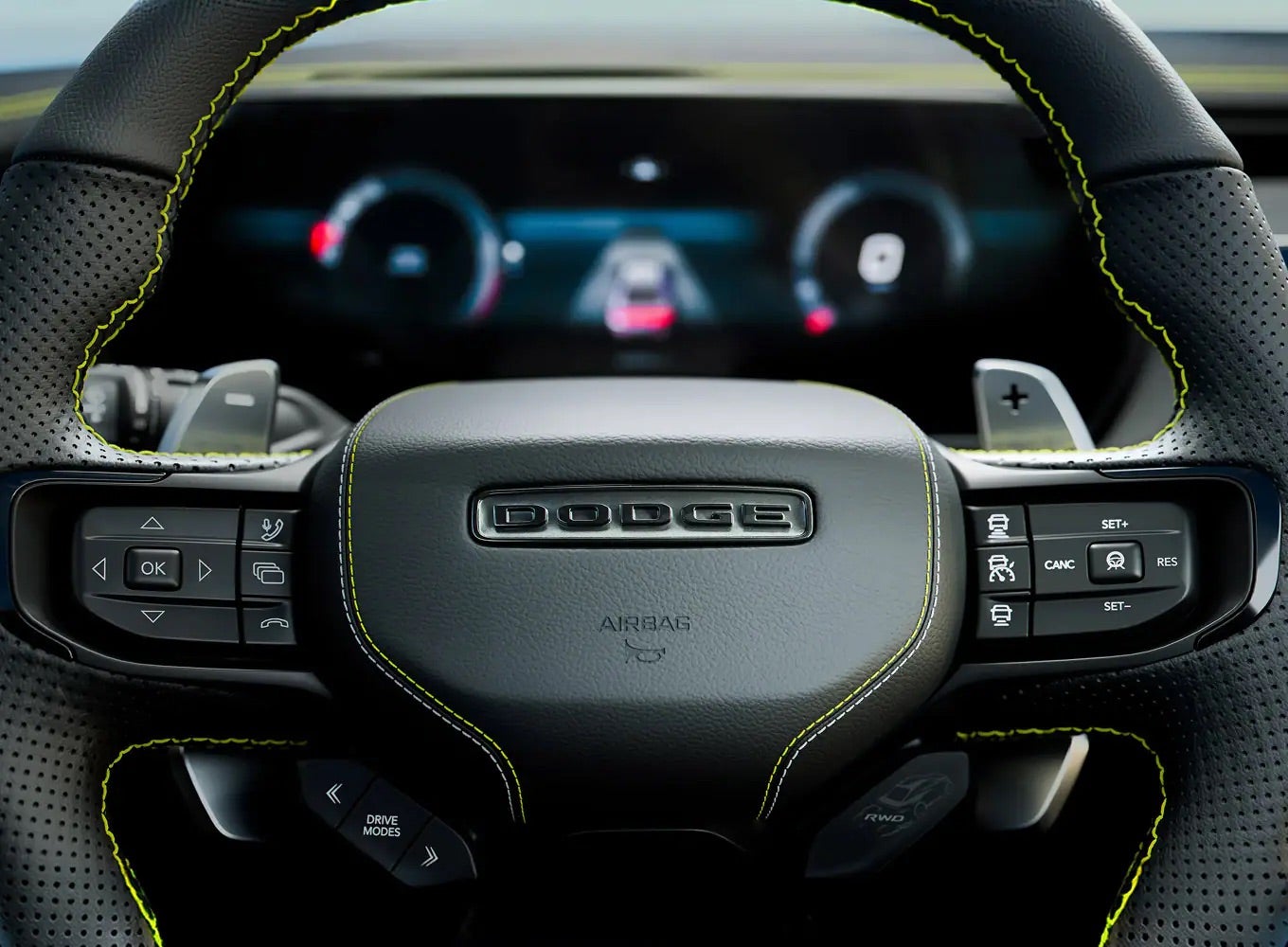
Visually, the new Dodge Super Bee continues the tradition with signature graphics, special badging, gloss-black wheels, a rear performance spoiler, bright brake calipers, and yellow interior stitching.

Most importantly, it represents Dodge’s effort to prove that the twin-turbo SIXPACK engine can carry the muscle-car torch. The sound and character may differ from a classic HEMI, but the performance numbers place the 2027 car firmly at the top of the Super Bee family tree.

Dodge Super Bee Performance Through the Years

Model

Engine

Horsepower

1968 Super Bee

383 Magnum V8

335 hp

1968–1971 HEMI models

426 HEMI V8

425 hp

1969 A12 Dodge Super Bee

440 Six Pack V8

390 hp

2007–2009 Charger SRT8 Super Bee

6.1L HEMI V8

425 hp

2012–2014 Charger SRT Super Bee

6.4L 392 HEMI V8

470 hp

2023 Charger Super Bee

6.4L 392 HEMI V8

485 hp

2027 Charger Super Bee

3.0L twin-turbo SIXPACK inline-six

600 hp

Ready to Find Your Ultimate Dodge Super Bee for Sale?

Finding a Dodge Super Bee for sale can take patience. Classic models are now valuable collector cars, while modern limited editions such as the 2007–2009 and 2023 versions do not appear on the market often.

The 2027 Dodge Charger Super Bee is expected to become available in limited Launch Edition production, with announced U.S. availability beginning in mid-2027. Pricing, allocation, and arrival timing may differ.

Contact Murray Chrysler Dodge Jeep Ram in Starke, Florida to ask about Charger availability, potential Super Bee allocation, or used performance vehicles currently in inventory. Our team can also help you compare the new SIXPACK-powered Charger with earlier HEMI-powered models.

Frequently Asked Questions

What is a Dodge Super Bee?

The Dodge Super Bee is a performance-focused muscle car first introduced in 1968. It began as a version of the Dodge Coronet before moving to the Charger lineup. Although its engines and technology have changed, Super Bee models traditionally emphasize power, bold graphics, and equipment intended for drag-strip or track performance.

How many 1969 Dodge Super Bees were made?

Approximately 27,800 Dodge Coronet Super Bees were built for the 1969 model year. Published figures can vary because some sources count different markets or body styles separately. Of those cars, only a small portion received the desirable A12 440 Six Pack package.

What type of engine did the Dodge Super Bee have?

That depends on the model year. Early Super Bees offered several V8 engines, including the 383 Magnum, 440 Six Pack, and 426 HEMI. Modern versions used 6.1-liter and 6.4-liter HEMI V8s. The 2027 Charger Super Bee introduces a 600-horsepower 3.0-liter twin-turbo SIXPACK inline-six.

What years did Dodge make the Super Bee?

In the North American market, Dodge offered the original Super Bee from 1968 through 1971. The badge returned on Charger models for 2007–2009, 2012–2014, and 2023. A new-generation Dodge Charger Super Bee is returning for the 2027 model year.

Dodge also sold a separate Mexican-market Super Bee on various compact platforms during the 1970s.

How much is a Dodge Super Bee?

The price depends heavily on the year, condition, originality, engine, documentation, and rarity. A standard modern used model and a documented classic HEMI or A12 car can occupy completely different price ranges. Dodge had not announced final 2027 Super Bee pricing at the time of writing. Contact Murray Chrysler Dodge Jeep Ram for the latest pricing and availability information.
Recommended Posts

Red Ram Towing

Ram 1500 Towing Capacity: How Much Can It Really Pull?

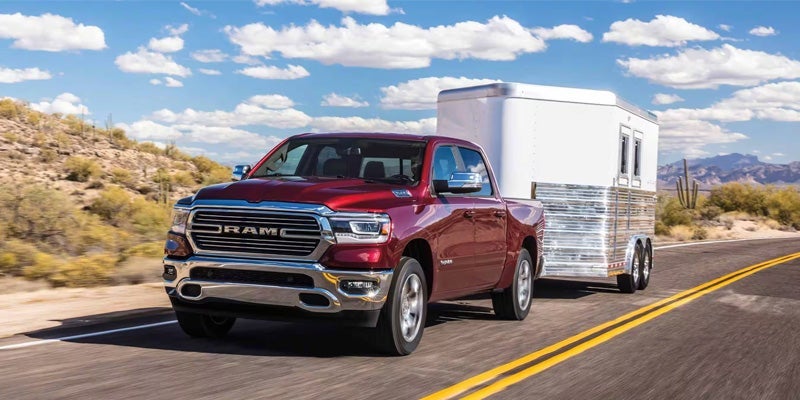
A tow rating looks simple until you add four passengers, a bed full of gear, a trailer tongue pressing down on the hitch, and the exact truck configuration you’re actually driving. That’s why Ram 1500 towing capacity is more useful as a range than a single headline number. For 2026, the Ram 1500 can tow up to 11,610 pounds when properly equipped, but engine, drivetrain, axle ratio, cab, bed, and payload all affect what an individual truck can handle. For drivers around Starke and North Florida, the right question isn’t just “What can a Ram 1500 tow?” It’s “What can the Ram 1500 I’m considering tow with the people and gear I actually carry?” The Headline Number: 11,610 Pounds The maximum Ram 1500 towing capacity comes from a properly equipped truck with the standard-output 3.0L Hurricane engine. For 2026, Ram’s published maximums break down like this: Engine Maximum Towing Maximum Payload 3.6L Pentastar V6 with eTorque 8,130 lbs. 2,360 lbs. 3.0L Hurricane Standard Output 11,610 lbs. 1,930 lbs. 5.7L HEMI V8 with eTorque 11,320 lbs. 1,650 lbs. 3.0L Hurricane High Output 10,000 lbs. 1,490 lbs. Notice something interesting? The most powerful engine doesn’t automatically tow the most. That’s why choosing a truck by horsepower alone can send you in the wrong direction. Hurricane, HEMI, or Pentastar? The standard-output 3.0L Hurricane makes 420 horsepower and 469 lb-ft of torque and delivers the highest 2026 Ram 1500 towing capacity at 11,610 pounds when properly configured. The returning 5.7L HEMI V8 produces 395 horsepower and 410 lb-ft of torque while offering up to 11,320 pounds of towing. Meanwhile, the 540-horsepower Hurricane High Output tops out at 10,000 pounds. So when you’re looking at Ram 1500 towing capacity, think about the complete truck rather than simply choosing the engine with the biggest horsepower figure. Payload Can Stop You Before Towing Capacity Does Here’s the number that deserves more attention: Ram 1500 payload capacity. Payload includes more than whatever you throw in the bed. Passengers, tools, coolers, accessories, cargo, and trailer tongue weight all use part of the truck’s available payload. For example, Ram lists a maximum payload of 2,360 pounds with the 3.6L Pentastar V6, while the standard-output Hurricane reaches up to 1,930 pounds. Exact ratings vary by configuration. That means a truck can theoretically have enough Ram 1500 towing capacity for your trailer while running short on available payload once you load the family and gear. The door-jamb labels on the actual truck matter more than a maximum number from a brochure. Cab, Bed, Drivetrain, and Axle Ratio All Get a Vote Two Ram 1500s with the same engine can have different tow ratings. Ram’s official towing chart shows how Ram 1500 payload capacity and trailer ratings change with Quad Cab versus Crew Cab, 4x2 versus 4x4, bed length, GVWR, and axle ratio. With the standard-output Hurricane, for example, configurations with a 3.92 axle ratio can exceed 11,000 pounds of towing, while other combinations are rated substantially lower. That’s why the advertised maximum Ram 1500 towing capacity shouldn’t be applied to every truck on the lot. If towing is central to how you’ll use your Ram, start with the trailer and work backward. Know its loaded weight, expected tongue weight, and what normally rides in the truck. What Does That Mean for a Real Trailer? The 2026 Ram 1500 towing capacity can cover a wide range of recreational and work-related trailers when the truck and trailer are properly matched. Depending on weight and configuration, that could include certain boats, utility trailers, campers, enclosed trailers, or equipment haulers. But trailer type alone doesn’t determine whether a setup works. A travel trailer and equipment trailer with similar scale weights can place different demands on the truck based on tongue weight, cargo distribution, aerodynamics, and loading. That’s why Ram 1500 towing capacity is best treated as one part of the calculation, not permission to hook up anything below 11,610 pounds. Towing Tech Helps When the Trailer Is Attached Capability isn’t only about moving the weight. Controlling and monitoring the trailer matters too. The 2026 Ram 1500 offers available towing technologies including Trailer Hitch Assist, Trailer Reverse Guidance with Dynamic Gridlines, a Digital Rearview Mirror with Tow Mode, an Integrated Trailer Health Monitor, and power telescoping trailer tow mirrors. These features don’t increase Ram 1500 towing capacity, but they can make connecting, backing, monitoring, and maneuvering with a trailer less stressful. They also don’t change Ram 1500 payload capacity, so the truck’s actual weight ratings still need to guide your setup. If you tow regularly, equipment like this may be just as important to your truck search as the maximum rating itself. Bring Us the Trailer Numbers The easiest way to choose the wrong tow vehicle is to start with a big number and assume everything underneath it will work. At Murray CDJR Starke, we can help you explore current Ram 1500 inventory and identify configurations that fit what you actually need to pull. If Ram 1500 towing capacity is a priority, bring us your trailer’s loaded weight, tongue-weight information, and an idea of what normally rides in the cab and bed. We can also help you look at Ram 1500 payload capacity, engine choice, drivetrain, axle ratio, and equipment on the specific truck you’re considering. The goal isn’t to buy the Ram with the biggest number on paper. It’s to leave with a truck that makes sense when the hitch is loaded, the bed is packed, and it’s time to pull onto the highway.

Jeep

What Is Mopar Express Lane? The Faster Way to Handle Routine Maintenance

Oil changes always seem to come due when your calendar is already full. Maybe the maintenance reminder just appeared. Maybe your tires need attention before another North Florida road trip. Or maybe your wipers have officially lost their battle with afternoon rain. However maintenance landed back on your to-do list, Mopar Express Lane makes routine service easier to fit into your day. At Murray Chrysler Dodge Jeep Ram Starke, we know most drivers would rather spend their day driving than waiting on basic maintenance. Express Lane gives you a convenient way to take care of common service needs and get back to everything else on your schedule. Routine Maintenance Without Making a Day of It The idea behind Express Lane is simple. Not every maintenance visit needs to feel like a major repair appointment. If you’re searching for a Mopar Express Lane near you, you’re probably looking for help with routine services such as an oil change, tire rotation, or vehicle checkup. Express Lane focuses on those common maintenance needs and is designed around convenience. That’s especially useful when your vehicle is running well and you simply want to keep it that way. Staying ahead of maintenance can also help you catch smaller concerns before they turn into inconvenient surprises. What Can You Get Done in the Mopar Express Lane? Common Mopar Express Lane services focus on preventive maintenance and everyday wear items. Depending on your vehicle and its needs, service may include: Oil and filter changes Tire rotations Multi-point inspections Wiper blade replacement Air filter replacement Tire checks and related maintenance Those aren’t glamorous jobs, but they matter. Healthy tires become especially important when a Florida downpour hits US-301. Fresh wiper blades make those same storms easier to see through. Regular oil changes help you stay on top of one of your engine’s most basic maintenance needs. Mopar Express Lane makes handling those smaller jobs a little less disruptive. Do You Need an Appointment? Convenience is one of the biggest reasons people use Mopar Express Lane. The program is built around quick routine maintenance, and participating locations can offer no-appointment-needed service for eligible needs. That gives you more flexibility when your schedule suddenly opens up or you realize your vehicle is overdue for attention. So, when you find yourself looking for a Mopar Express Lane near you while you’re out running errands, you may not need to plan your maintenance visit weeks ahead. Wait times and service availability can still vary. If you need a specific service or want to know what to expect before coming in, our Murray CDJR Starke team can help. Quick Service Should Still Feel Thorough Fast shouldn’t mean careless. Routine maintenance gives technicians an opportunity to handle the service you requested while paying attention to other basic areas of your vehicle. A multi-point inspection can help uncover everyday wear you may not notice from behind the wheel. Think about a weakening battery, uneven tire wear, worn wipers, or a dirty filter. None of those issues may stop your vehicle today, but knowing about them sooner gives you more control over when and how you address them. That’s part of the value of Mopar Express Lane. You’re not just checking a maintenance reminder off your list. You’re giving your vehicle regular attention before it has to demand it. Built for the Way Starke Drivers Actually Drive North Florida can keep a vehicle busy. Daily commutes, trips toward Gainesville or Jacksonville, school runs, towing, weekend travel, summer heat, and sudden storms all put different demands on your car, truck, SUV, or Jeep. Regular Mopar Express Lane services can help you stay ahead of those miles without making maintenance harder than necessary. And if your vehicle needs more than routine care, our full service department is here for the bigger jobs too. Express Lane simply gives everyday maintenance a faster path. Need a Mopar Express Lane Near You? Make It Murray CDJR Starke When the oil-change reminder appears, you don’t need to keep pressing “remind me later.” If you’re looking for a Mopar Express Lane, bring your vehicle to Murray Chrysler Dodge Jeep Ram Starke. Our team can help determine what maintenance your vehicle needs and whether Express Lane is the right place to handle it. Take care of the routine stuff now, and you’ll have one less thing competing for your attention later. Mopar Express Lane FAQs Still deciding whether Express Lane fits your next service visit? Here are quick answers about Mopar Express Lane services and how it can make routine maintenance easier. What is Mopar Express Lane? It’s a quick-service option for common vehicle maintenance such as oil changes, tire rotations, inspections, filters, wiper blades, and other routine needs. It’s designed to help drivers take care of regular maintenance conveniently. Do you need an appointment for Mopar Express Lane? Many eligible Express Lane services are designed to be available without a traditional appointment. If you’re looking for a Mopar Express Lane near you, wait times and availability can still vary, so you can contact Murray CDJR Starke if you have a specific maintenance need or want to check before visiting. How does Mopar Express Lane work? Bring your vehicle in for an eligible routine maintenance service. The service team reviews what you need, technicians complete the applicable work, and your vehicle can receive additional basic checks as appropriate. The goal is straightforward: handle routine care efficiently and get you back on the road.

blue ram

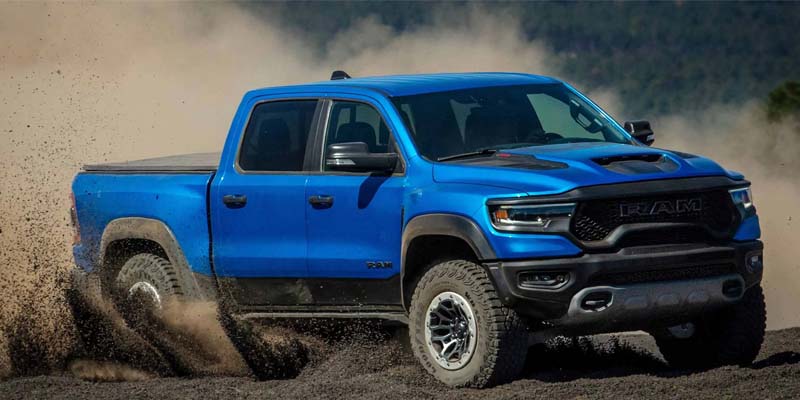
What Is Ram eTorque and How Does It Work?

You press the accelerator, the truck moves, and most of the work happening behind the scenes goes unnoticed. That’s exactly how Ram eTorque is supposed to feel. Rather than turning the Ram 1500 into a full hybrid or asking the driver to manage another system, eTorque quietly helps with engine restarts, low-speed response, and energy recovery. For truck shoppers around Starke, understanding what it does can make the engine lineup much easier to navigate. What Is Ram eTorque? Think Electric Assist, Not Electric Driving Ram eTorque is a mild-hybrid system that replaces a traditional alternator with a belt-driven motor generator connected to a 48-volt battery. The gasoline engine still does the primary work of moving the truck, while the electric side steps in at specific moments to improve responsiveness and efficiency. That distinction matters. A Ram eTorque engine isn’t a plug-in hybrid, and you don’t charge it from an outlet. The system works automatically in the background. For 2026, Ram offers eTorque with the 3.6L Pentastar® V6 and the returning 5.7L HEMI® V8. How Does Ram eTorque Work on the Road? If you’re asking how does Ram eTorque work, the motor generator is the heart of the system. When the truck needs assistance, it can use stored electrical energy to add torque through the engine’s belt system. When you slow down, the motor generator can reverse roles and recover energy that would otherwise be lost, sending it back to the 48-volt battery. That stored energy can then support the next engine restart or provide brief torque assistance when conditions call for it. In other words, Ram eTorque is constantly switching between helping and recovering energy without asking you to push another button. Stop-and-Go Driving Is Where You May Notice It Most Automatic start/stop systems sound simple until you’re sitting through one traffic light after another. One of the everyday benefits of Ram eTorque is smoother engine shutdowns and restarts. The belt-driven motor generator can restart the engine quickly instead of relying only on a conventional starter for every stop/start event. Ram also credits the system with supporting an upgraded Start/Stop System and contributing to fuel-economy gains. That helps explain how Ram eTorque works in normal driving. You don’t necessarily feel a dramatic burst of electric power. Instead, the benefit can show up in smoother transitions and less wasted energy during the constant slowing, stopping, and accelerating of everyday traffic. Around Starke, that could mean everything from errands around town to stop-and-go stretches along U.S. 301. The Extra Torque Helps Where Trucks Need It The “torque” in Ram eTorque isn’t just branding. On the current 3.6L Pentastar V6, the system can provide up to 90 lb-ft of initial torque boost. Ram’s 2026 specifications list the engine itself at 305 horsepower and 269 lb-ft of torque. The 5.7L HEMI V8 with eTorque produces 395 horsepower and 410 lb-ft of engine torque. Its eTorque system can make up to 130 lb-ft of additional torque available during initial throttle application. That supplemental assistance is especially useful when getting the truck moving from a stop. It doesn’t simply get added to the engine’s peak torque rating, though. Think of it as short-duration help where the powertrain can use it. That’s a more useful way to understand a Ram eTorque engine than expecting the system to behave like a separate electric motor powering the truck. Ram eTorque Also Recovers Energy When You Slow Down Another piece of the what is Ram eTorque question happens when your foot comes off the accelerator. During deceleration and braking, the motor generator can capture energy and send it back to the system’s 48-volt battery. Ram calls this brake energy regeneration. That recovered energy can then be reused instead of simply being lost during slowing. There’s nothing to plug in overnight and no special charging routine to learn. That’s part of what makes Ram eTorque different from the hybrid experience many shoppers picture. The electrical side supports the gasoline powertrain while largely staying out of the driver’s way. Which Ram eTorque Engine Fits Your Truck? The system may be similar, but the two current eTorque engines serve different shoppers. The 3.6L Pentastar V6 with eTorque offers 305 horsepower and can tow up to 8,130 pounds when properly configured. The 5.7L HEMI V8 brings 395 horsepower and can reach up to 11,320 pounds of towing capacity in the right configuration. Actual towing and payload depend on the truck’s cab, drivetrain, axle ratio, equipment, and other factors. So if you’re deciding between Ram eTorque engine options, start with the work. Daily driving and lighter towing may point you toward the V6, while buyers who want V8 sound, power, and greater available towing capability may prefer the HEMI. Put the Ram eTorque to Work in Starke Reading about how Ram eTorque works is useful. Feeling how smoothly it operates from behind the wheel makes the technology easier to understand. At Murray CDJR of Starke, our team can help you look at current Ram 1500 engine options, towing needs, trims, and equipment to find the truck that fits your day-to-day driving. You’ll find us at 15160 U.S. Highway 301 South in Starke. Explore our current Ram inventory today and see how eTorque fits into the truck you actually need. More Help, Without More Work From the Driver The smartest part of Ram eTorque may be how little you have to think about it. The system can recover energy, smooth engine restarts, and provide short bursts of torque assistance while you simply drive. That’s the answer to what is Ram eTorque in practical terms: extra electrical support working quietly behind a gasoline engine to make the Ram 1500 more responsive and efficient.