





Mustang vs. Charger: Performance & Specs
A smaller performance car
Rear-wheel drive
Available naturally aspirated V8 power
An available six-speed manual
A convertible option
A more traditional sports-car driving position
Standard all-wheel drive
420 or 550 horsepower from the SIXPACK gas engines
Five-passenger seating
Available four-door practicality
A large liftback cargo opening
Strong Dodge Charger 0-60 performance
An available all-electric performance model
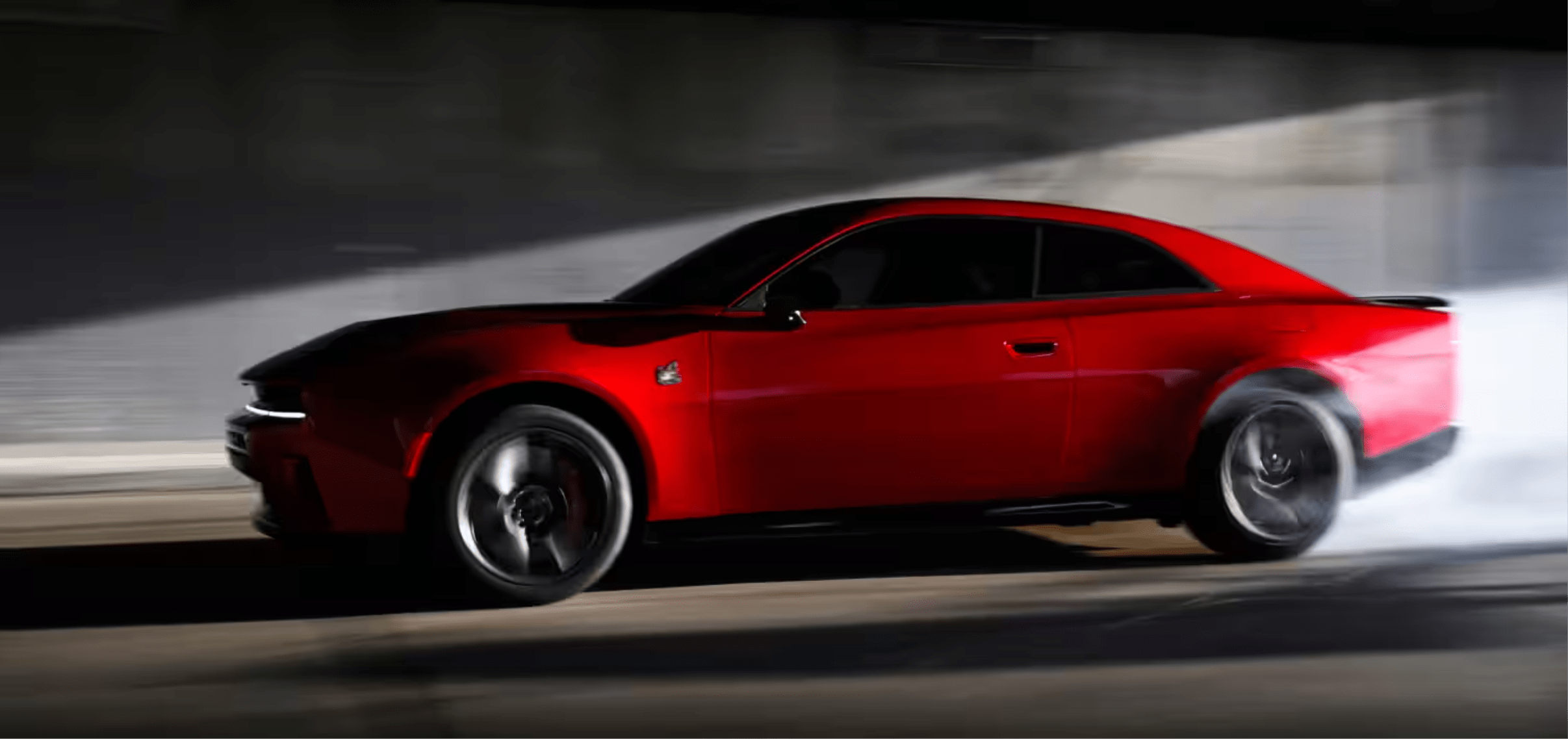
Mustang vs. Charger:
Performance, Specs & Which One Fits Your Drive?
Two legendary performance names can still take very different roads.
The Mustang vs Charger decision for 2026 comes down to more than horsepower. The Ford Mustang stays close to the traditional sports-car formula with rear-wheel drive, available V8 power, an available manual transmission, and compact proportions. The Dodge Charger goes bigger, pairing standard all-wheel drive with available two- or four-door body styles, strong twin-turbo SIXPACK power, and an all-electric Daytona option.
At Murray CDJR Starke, we think the most useful way to approach Dodge Charger vs Ford Mustang is to look beyond the badges. Acceleration matters, but so do passenger space, cargo flexibility, traction, technology, and how each car feels during everyday driving.
Mustang vs Charger at a Glance
Spec | 2026 Ford Mustang | 2026 Dodge Charger |
|---|---|---|
Gas engines | 2.3L turbo I-4 or 5.0L V8 | 3.0L twin-turbo SIXPACK I-6 |
Gas horsepower range | 315–500 hp | 420–550 hp |
Higher-performance model | Dark Horse SC: 795 hp | Daytona Scat Pack EV: 670 hp |
Drivetrain | Rear-wheel drive | Standard all-wheel drive |
Transmission | 10-speed automatic; 6-speed manual available on select V8 models | Automatic |
Doors | Two | Two or four |
Seating | Up to 4 | Up to 5 |
Body styles | Fastback or convertible | Liftback coupe or four-door |
Character | Smaller, traditional sports-car feel | Larger performance car with more everyday flexibility |
The numbers show why Mustang vs Charger isn’t simply a battle between two versions of the same idea. Mustang emphasizes traditional sports-car choices, while Charger combines serious power with a larger, more versatile platform. Acceleration is another major part of the story, especially once you start looking at Dodge Charger 0-60 times across the lineup.
Two Very Different Ways to Make Horsepower
The engines may be the clearest dividing line in Dodge Charger vs Ford Mustang. Mustang gives you more engine variety and available V8 character, while Charger centers its gas lineup around turbocharged SIXPACK power and standard AWD.
Ford Mustang
The Mustang side of Mustang vs Charger starts with a 315-hp 2.3L EcoBoost four-cylinder, while GT models step up to a 5.0L V8 with 480 horsepower, or up to 486 horsepower with the available active-valve exhaust. Dark Horse reaches 500 horsepower, and select V8 models still offer a six-speed manual.
Dodge Charger
The 2026 Charger takes a different route with a 3.0L twin-turbo SIXPACK straight-six. R/T makes 420 horsepower and 468 lb-ft of torque, while Scat Pack delivers 550 horsepower and 531 lb-ft. Both come standard with AWD and can send power to the rear wheels.
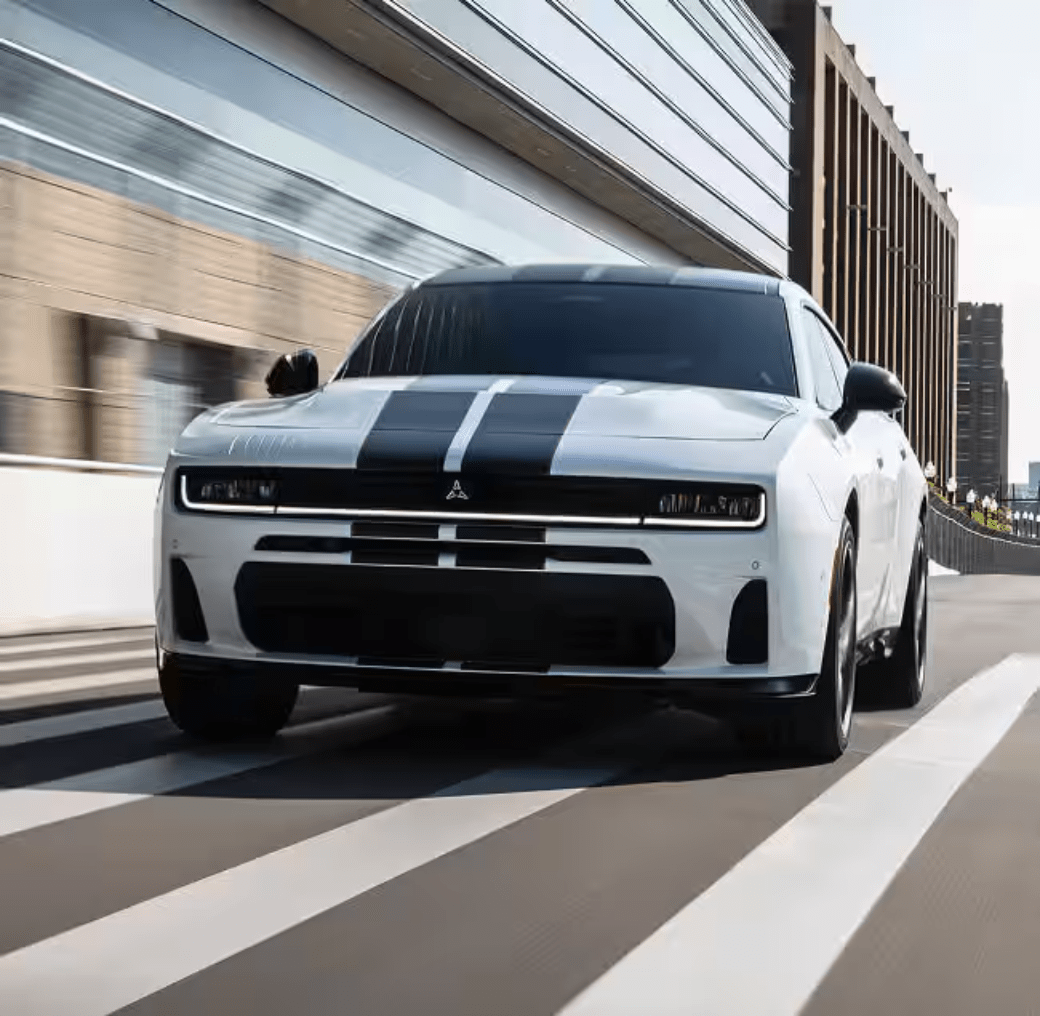
How Quickly Do Mustang and Charger Hit 60 MPH?
Mustang vs Charger gets especially interesting once the focus shifts from horsepower to how quickly each car can put that power down.
The Dodge Charger 0-60 time depends heavily on the model. Dodge estimates the 420-horsepower R/T can reach 60 mph in about 4.6 seconds, while the 550-horsepower Scat Pack cuts that to around 3.9 seconds. The electric Daytona Scat Pack is quicker still, with a manufacturer-estimated 3.3-second 0-60 time.
The Ford Mustang GT 0-60 result also varies by transmission, equipment, tires, and testing conditions. Independent testing has recorded an automatic Mustang GT at about 3.7 seconds, while a manual-equipped GT has taken around 4.2 seconds.
Those numbers show how close the two can be in a straight line. In Dodge Charger vs Ford Mustang, the bigger difference is delivery: Charger uses standard AWD and strong turbo torque, while Mustang sticks with a more traditional rear-wheel-drive feel.
Size and Driving Feel Set Them Apart
One of the biggest Mustang vs Charger differences is size.
The Mustang measures roughly 189 inches long, while the current Charger stretches to around 206 inches. That gap can matter in parking lots, garages, and on tighter roads.
Mustang pairs its smaller footprint with rear-wheel drive, a driver-focused cabin, an available manual transmission, and performance hardware on GT and Dark Horse models. Charger feels more substantial, with a wider stance, longer body, standard AWD, and strong low-end torque.
For shoppers weighing Dodge Charger vs Ford Mustang, Mustang leans toward a more traditional sports-car experience, while Charger brings more road presence and all-weather traction.
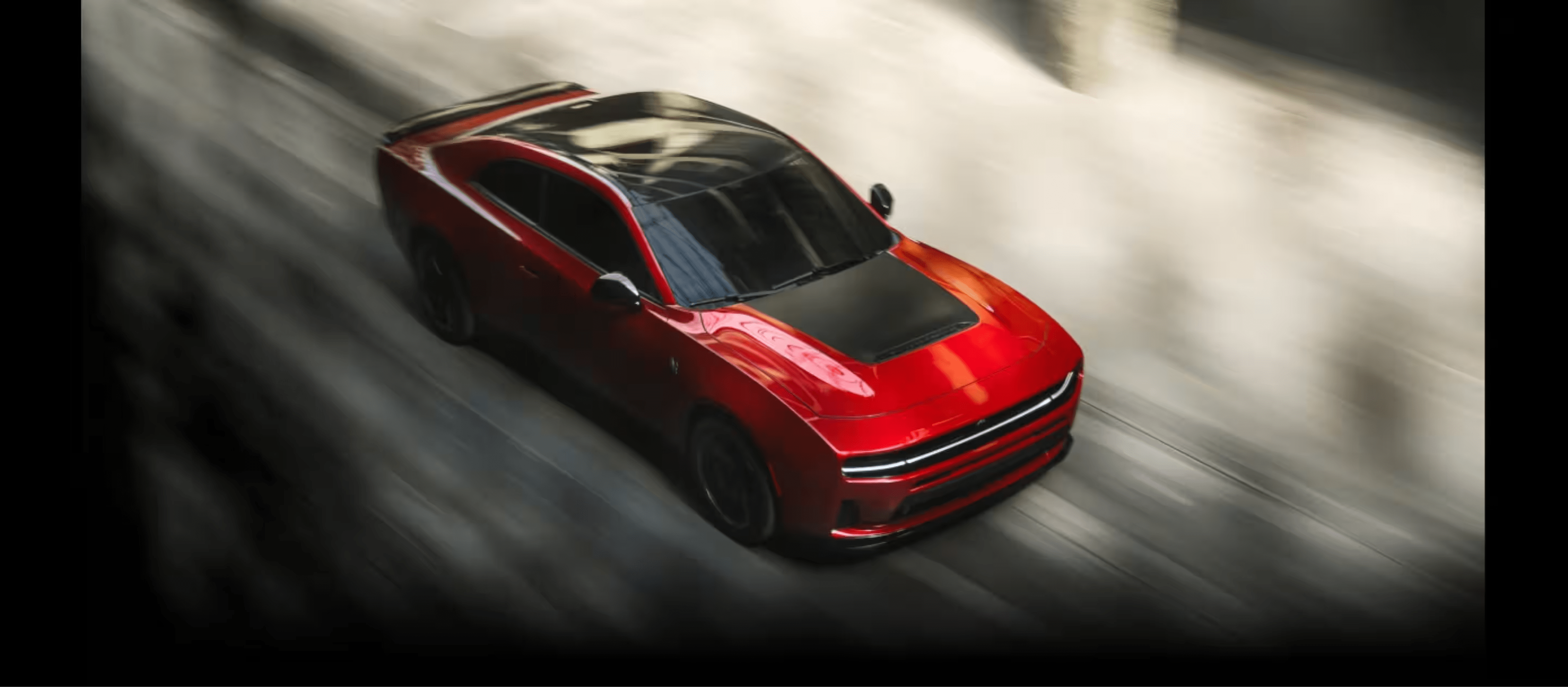
Charger Brings AWD Into the Performance Equation
Mustang vs Charger highlights two different approaches to putting power down. Rear-wheel drive has long been part of the muscle-car formula, but the Charger adds another dimension.
Standard AWD helps the Charger put power down in hard launches and wet conditions, while rear-wheel-drive mode lets gas models change up the driving feel.
Depending on configuration, Charger performance hardware can include launch control, Line Lock, performance suspension tuning, Brembo brakes, and selectable drive modes. That traction and performance hardware also help explain why Dodge Charger 0-60 capability can be so strong despite the car’s larger dimensions.
The Mustang sticks with rear-wheel drive throughout the lineup, preserving the more traditional sports-car character many Mustang shoppers want.
Neither layout automatically makes one car better. The Mustang vs Charger choice comes down to whether you prioritize classic rear-drive dynamics or the added traction and flexibility of standard AWD.
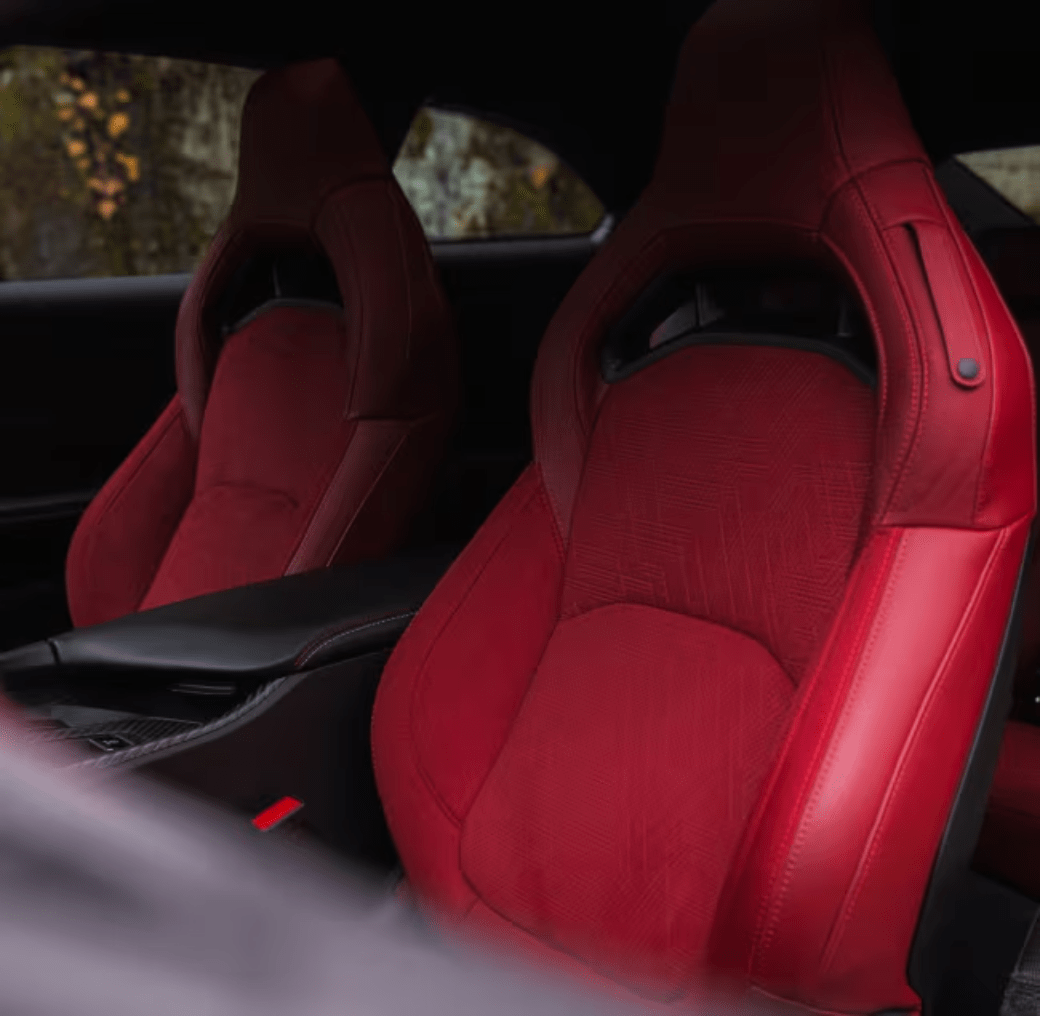
Charger Offers More Passenger and Cargo Flexibility
Mustang vs Charger isn’t just about performance. Everyday practicality matters, too.
The Mustang seats up to four and offers roughly 13.5 cubic feet of trunk space in Fastback models. Its rear seats work best for occasional passengers or extra storage.
The Charger seats up to five and offers two- or four-door configurations. Its liftback-style rear opening also makes larger items easier to load, with more cargo flexibility when the rear seats are folded.
That makes Dodge Charger vs Ford Mustang especially relevant for shoppers using one car for both performance and daily life. Mustang favors a smaller coupe experience, while Charger adds easier passenger access and more usable cargo space.
Classic Sports-Car Shape or Widebody Muscle?
You probably won’t mistake one for the other in the parking lot.
The Mustang keeps the long hood, short rear deck, and compact proportions that have defined the nameplate for generations. Fastback and convertible body styles give shoppers two distinctly different ways to enjoy the same basic design.
The Charger takes a wider and more imposing approach. Its current design blends classic Dodge muscle-car cues with a modern liftback body, giving it a low roofline without sacrificing as much cargo access.
This part of Mustang vs Charger comes down largely to taste. Mustang looks smaller, tighter, and more traditionally athletic. Charger looks broader, lower, and more aggressive, with a road presence that matches its larger footprint.
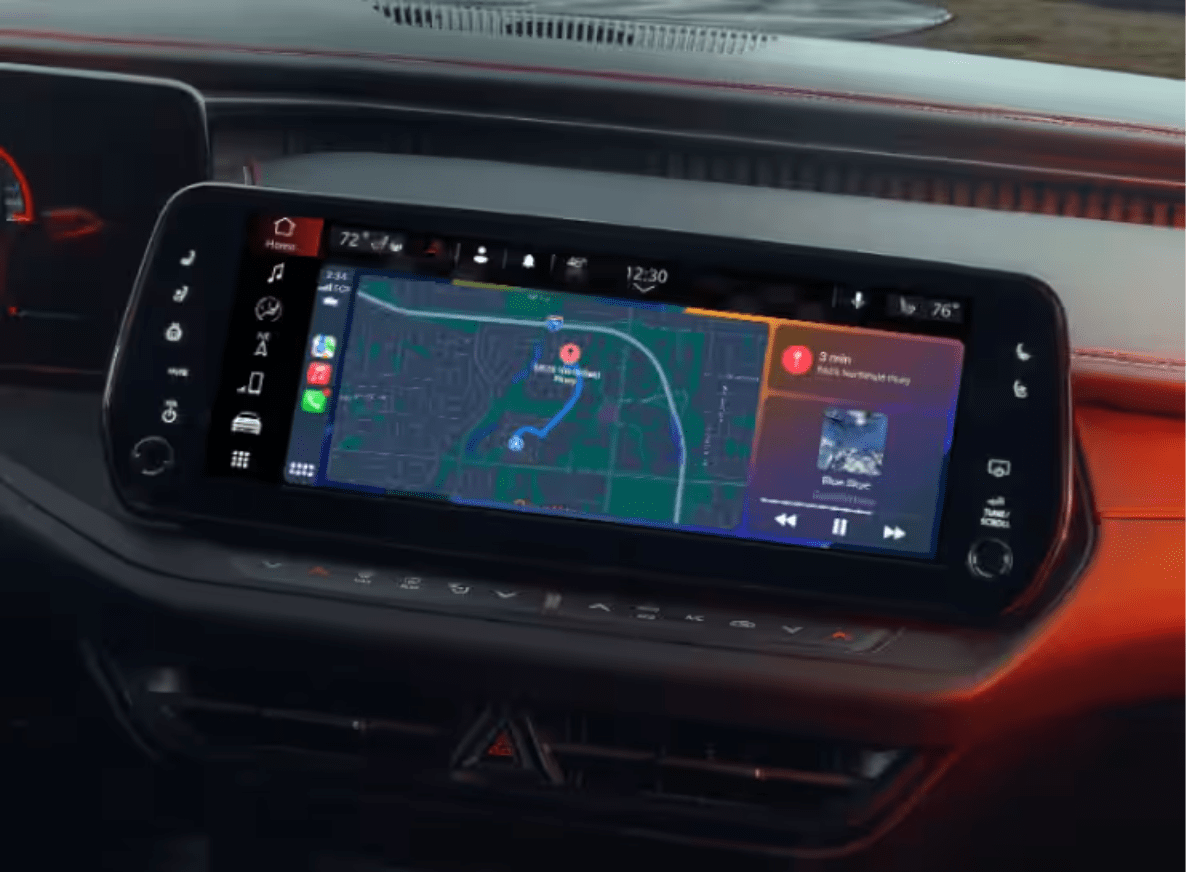
Technology Keeps Up With the Performance
With Dodge Charger vs Ford Mustang, modern muscle isn’t just about what’s under the hood.
The Mustang places a 12.4-inch digital instrument cluster directly in front of the driver and pairs it with a 13.2-inch center touchscreen. Available display configurations let drivers change the presentation to suit different driving modes and preferences.
The Charger uses a 12.3-inch Uconnect 5 touchscreen along with a digital instrument cluster. Higher configurations can add a larger digital display, head-up display, premium Alpine audio, customizable cabin lighting, and additional performance information.
The technology difference in Mustang vs Charger is less about which car has screens and more about how those screens fit the experience. Mustang wraps its technology around a smaller cockpit, while Charger spreads its displays across a wider cabin with more passenger space.
Which Fits Your Drive: Mustang or Charger?
There’s no universal answer to which is better in Mustang vs Charger. The right choice depends on whether you want a more traditional sports-car experience or more everyday space and flexibility.
Ford Mustang
The Mustang may fit you better if you want:
Mustang stays closer to the focused sports-car formula, putting compact dimensions and driver involvement near the top of the priority list.
Dodge Charger
The Charger may make more sense if you want:
The Charger blends muscle-car performance with more passenger space, cargo flexibility, and everyday usability.
See What Charger Performance Feels Like in Starke
A spec sheet can tell you horsepower and Dodge Charger 0-60 estimates. It can’t show you how the Charger’s wide stance feels from the driver’s seat, how useful the rear hatch is in everyday life, or whether two doors or four fit your routine better.
At Murray CDJR Starke, our team can help you explore the current Charger lineup, compare available configurations, and see how the Mustang vs Charger differences translate to the specific vehicle you’re considering.
Mustang vs Charger FAQs
Still weighing Dodge Charger vs Ford Mustang? These FAQs break down acceleration, horsepower, practicality, driving character, and other differences shoppers ask about most.
How fast does a Dodge Charger go from 0-60?
The Dodge Charger 0-60 time depends on the model. The 2026 Charger R/T has a manufacturer-estimated 0-60 time of about 4.6 seconds, while the 550-horsepower Scat Pack is estimated at approximately 3.9 seconds. The electric Daytona Scat Pack can reach 60 mph in an estimated 3.3 seconds. Actual acceleration varies with conditions and equipment.
How fast does a Ford Mustang go from 0-60?
The Ford Mustang GT 0-60 time varies by transmission, equipment, and testing conditions. Independent testing has recorded an automatic Mustang GT reaching 60 mph in about 3.7 seconds, while a manual-equipped GT has taken around 4.2 seconds. Those numbers give shoppers another useful benchmark when comparing Mustang vs Charger performance.
Is a Dodge Charger a sports car?
The Dodge Charger is generally considered a muscle or performance car rather than a traditional sports car. Its larger dimensions, five-passenger seating, available four-door body, and emphasis on powerful acceleration distinguish it from smaller sports cars.
How much horsepower does a Dodge Charger have?
The 2026 Charger R/T produces 420 horsepower, while the gas-powered Scat Pack produces 550 horsepower. The electric Charger Daytona Scat Pack produces 670 horsepower. Exact output depends on configuration.
Is a Ford Mustang a sports car?
Yes. The Ford Mustang fits the sports-car category with its two-door design, rear-wheel-drive platform, performance-focused chassis, and available manual transmission. GT and Dark Horse models add V8 power for shoppers who want even more performance.
Which is better, Mustang or Charger?
For Mustang vs Charger, the better fit depends on what you value most. Mustang offers a smaller footprint, available V8 power, rear-wheel drive, an available manual transmission, and a convertible. Charger counters with standard AWD, five-passenger seating, available four-door practicality, a larger cargo area, and strong turbocharged or electric performance.
Is a Charger or Mustang more reliable?
There isn’t enough long-term information on the latest Charger generation to make a meaningful blanket claim that one is more reliable than the other. Reliability can also vary by powertrain, maintenance, driving habits, and individual vehicle history. When considering Dodge Charger vs Ford Mustang, it’s smarter to compare warranty coverage, maintenance requirements, and the condition and service history of the specific vehicle you’re considering.