


Murray Chrysler Dodge Jeep Ram of Starke

Blog

Jeep Wrangler vs Gladiator: SUV or Pickup?

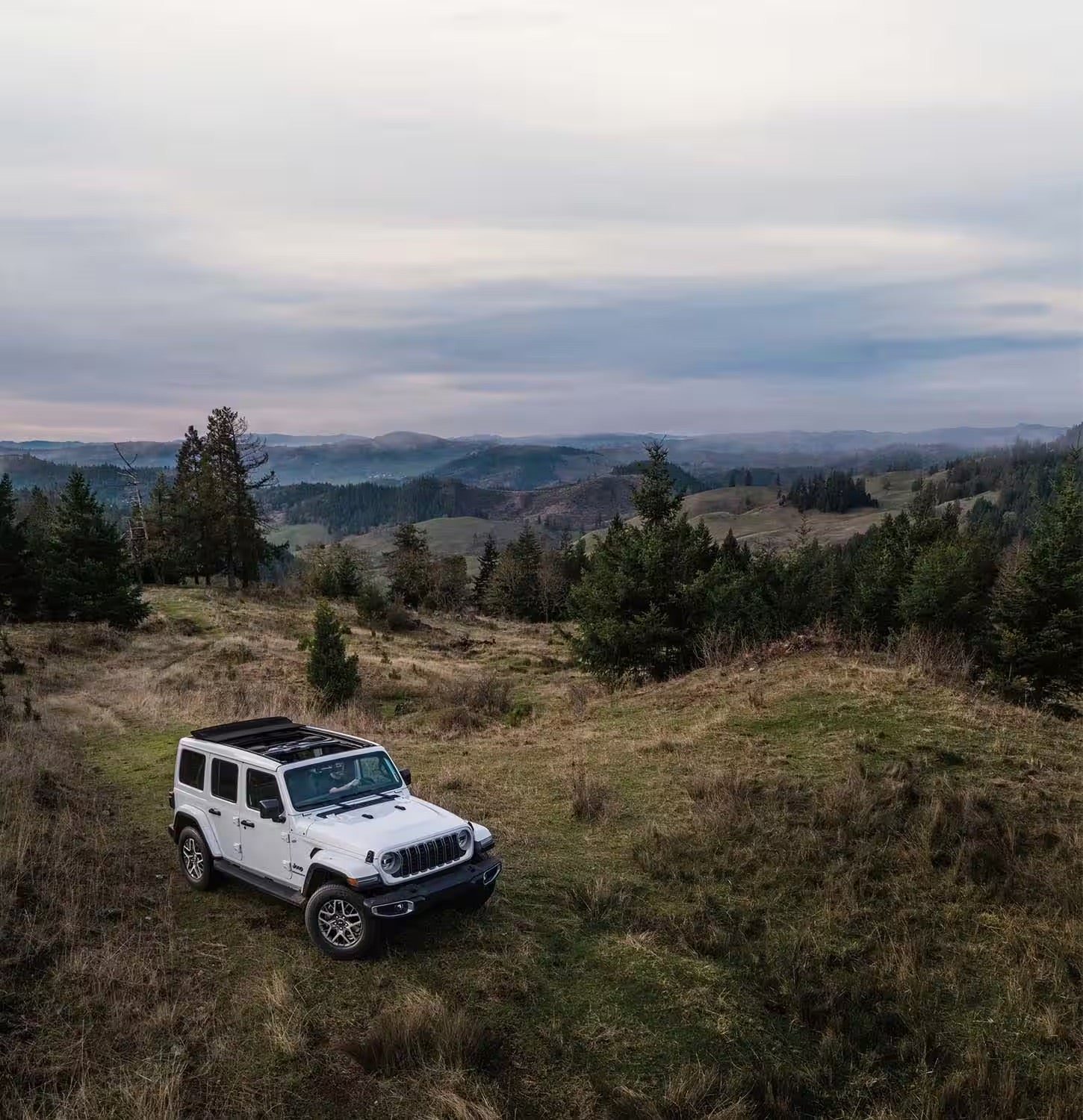
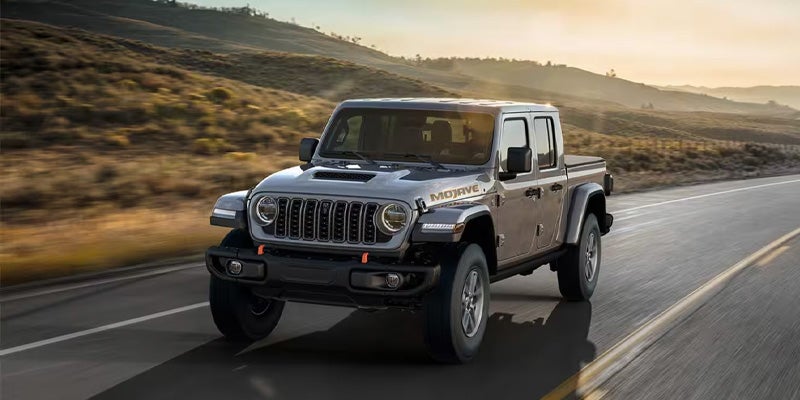
jeep gladiator on the road

The Jeep Wrangler and Jeep Gladiator share an unmistakable family resemblance. Both bring authentic Jeep Brand character, open-air freedom, standard 4x4 capability, and trims designed for drivers who don’t always stay on pavement.

The big difference is parked behind the cabin. Wrangler gives you an enclosed SUV cargo area, while Gladiator adds a five-foot pickup bed. That single change affects overall length, towing strength, cargo flexibility, trail maneuverability, and everyday usefulness.

When comparing Jeep Wrangler vs Gladiator, the decision comes down to one question: Do you need SUV versatility, or truck utility offered by a new Jeep Gladiator for sale?

Wrangler Keeps the Adventure Inside

Wrangler is the SUV of this comparison, with two-door and four-door body styles that balance maneuverability, passenger space, and cargo flexibility.

The two-door Wrangler measures 166.8 inches long, while the four-door stretches to 188.4 inches. When comparing Jeep Wrangler vs Gladiator, Wrangler’s shorter footprint can make it easier to handle on tight trails, in crowded parking lots, and around downtown Starke. The four-door adds easier rear-seat access and more room for passengers and gear.

Wrangler also keeps cargo protected inside, which is useful for groceries, luggage, camping supplies, and anything you’d rather shield from Florida rain. It’s the stronger fit when enclosed storage and passenger flexibility matter more than having a truck bed.

Gladiator Puts a Pickup Bed Behind the Jeep Experience

When comparing Jeep Wrangler vs Gladiator, the Gladiator stands out by adding real pickup utility to familiar Jeep design. Every current Gladiator combines a four-door cabin with a 60.3-inch bed, giving bikes, tools, coolers, landscaping supplies, and muddy gear a place outside the passenger area.

That extra cargo space comes with a larger footprint. At 218 inches long, Gladiator requires more room to park and has a longer wheelbase than Wrangler. The tradeoff is greater hauling flexibility, while Wrangler may feel easier to maneuver on tighter trails and around town.

Shoppers searching for a new Jeep Gladiator for sale should look beyond the rugged styling and think about how often they’ll use the bed. Gladiator is the stronger fit for home projects, outdoor equipment, and cargo-heavy weekends, while Wrangler keeps the advantage for drivers who prefer a shorter, more SUV-like setup.

The Specs Tell Two Different Stories

A look at Jeep Gladiator vs Jeep Wrangler specs makes each model’s purpose clear. The 2026 Gladiator’s 3.6-liter Pentastar V6 delivers up to 285 horsepower and 260 pound-feet of torque. When properly equipped, it can tow up to 7,700 pounds and carry up to 1,720 pounds of payload.

In Jeep Wrangler vs Gladiator, a four-door Wrangler can tow up to 5,000 pounds, while a two-door model can tow up to 2,000 pounds. Gladiator has the edge for heavier trailers and truck-style hauling, while Wrangler is better suited to lighter towing and SUV-focused adventures.

Which One Handles Daily Life Better?

There’s no automatic winner in Jeep Wrangler vs Gladiator. The better daily driver depends on what “daily” means for you.

Wrangler may be the easier fit when you:

  • Frequently park in tighter spaces
  • Want enclosed cargo storage
  • Prefer the choice of two or four doors
  • Carry passengers more often than dirty or oversized gear
  • Want a shorter vehicle for trails and city driving

Gladiator may be the smarter choice when you:

  • Regularly haul outdoor gear or project supplies
  • Need stronger maximum towing capability
  • Want a truck bed without losing Jeep open-air character
  • Carry cargo you’d rather keep outside the cabin
  • Need one vehicle for weekday jobs and weekend trails

For drivers traveling between Starke, Gainesville, Jacksonville, and nearby North Florida communities, both can handle commutes and weekend trips. A new Jeep Gladiator for sale makes more sense when two rows of seating, open-air Jeep character, and pickup utility all belong on your must-have list.

Trail Personality Comes Standard

In Jeep Wrangler vs Gladiator, choosing the pickup doesn’t mean leaving Jeep capability behind. Both models carry the Trail Rated badge, although available equipment varies by trim. Wrangler’s shorter body can help on narrow routes and sharp trail turns, while Gladiator adds room to carry more equipment in its bed.

Rubicon models push both vehicles toward technical terrain with specialized off-road hardware. Gladiator also offers Mojave models designed with desert-running performance in mind. The right trim matters almost as much as choosing between SUV and pickup, so compare the exact tires, suspension, differentials, and packages on each vehicle.

Put SUV and Pickup Side by Side in Starke

A list of Jeep Gladiator vs Jeep Wrangler specs can narrow your choices, but it can’t show you how each vehicle fits your routine. Sit in both. Open the Wrangler cargo area. Lower the Gladiator tailgate. Check rear-seat access and picture where your usual gear would go.

At Murray CDJR of Starke, our team can help you compare Jeep Wrangler vs Gladiator models and review the equipment on specific vehicles. We’re located on US-301 in Starke and serve drivers throughout Bradford County and North Florida.

Explore our Jeep inventory, schedule two back-to-back test drives, or ask our team to help you locate a new Jeep Gladiator for sale with the capability and features your plans require.

Pick the Shape of Your Next Adventure

Wrangler keeps the classic Jeep formula focused on SUV flexibility, a more compact footprint, and enclosed cargo space. Gladiator stretches that formula into a pickup with a five-foot bed and greater maximum towing capability.

That’s the clearest way to think about Jeep Wrangler vs Gladiator. Choose Wrangler when you want an adventure vehicle that works like an SUV. Choose Gladiator when your projects, hobbies, or weekends call for a truck. For shoppers considering a new Jeep Gladiator for sale, the pickup bed and added hauling strength are what make it the more practical everyday choice.
Recommended Posts

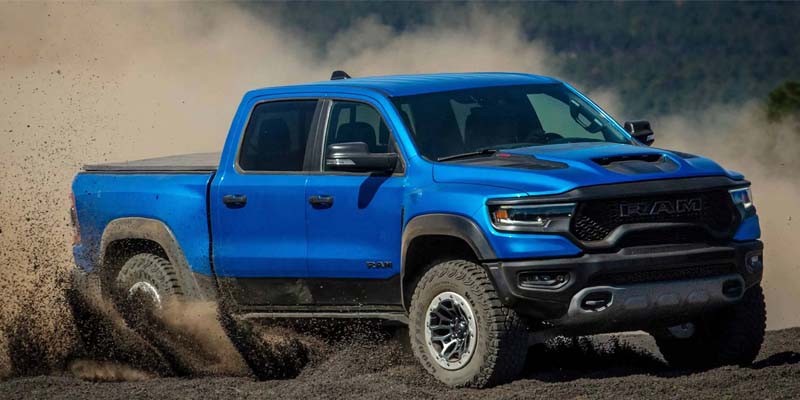
blue ram

What Is Ram eTorque and How Does It Work?

You press the accelerator, the truck moves, and most of the work happening behind the scenes goes unnoticed. That’s exactly how Ram eTorque is supposed to feel. Rather than turning the Ram 1500 into a full hybrid or asking the driver to manage another system, eTorque quietly helps with engine restarts, low-speed response, and energy recovery. For truck shoppers around Starke, understanding what it does can make the engine lineup much easier to navigate. What Is Ram eTorque? Think Electric Assist, Not Electric Driving Ram eTorque is a mild-hybrid system that replaces a traditional alternator with a belt-driven motor generator connected to a 48-volt battery. The gasoline engine still does the primary work of moving the truck, while the electric side steps in at specific moments to improve responsiveness and efficiency. That distinction matters. A Ram eTorque engine isn’t a plug-in hybrid, and you don’t charge it from an outlet. The system works automatically in the background. For 2026, Ram offers eTorque with the 3.6L Pentastar® V6 and the returning 5.7L HEMI® V8. How Does Ram eTorque Work on the Road? If you’re asking how does Ram eTorque work, the motor generator is the heart of the system. When the truck needs assistance, it can use stored electrical energy to add torque through the engine’s belt system. When you slow down, the motor generator can reverse roles and recover energy that would otherwise be lost, sending it back to the 48-volt battery. That stored energy can then support the next engine restart or provide brief torque assistance when conditions call for it. In other words, Ram eTorque is constantly switching between helping and recovering energy without asking you to push another button. Stop-and-Go Driving Is Where You May Notice It Most Automatic start/stop systems sound simple until you’re sitting through one traffic light after another. One of the everyday benefits of Ram eTorque is smoother engine shutdowns and restarts. The belt-driven motor generator can restart the engine quickly instead of relying only on a conventional starter for every stop/start event. Ram also credits the system with supporting an upgraded Start/Stop System and contributing to fuel-economy gains. That helps explain how Ram eTorque works in normal driving. You don’t necessarily feel a dramatic burst of electric power. Instead, the benefit can show up in smoother transitions and less wasted energy during the constant slowing, stopping, and accelerating of everyday traffic. Around Starke, that could mean everything from errands around town to stop-and-go stretches along U.S. 301. The Extra Torque Helps Where Trucks Need It The “torque” in Ram eTorque isn’t just branding. On the current 3.6L Pentastar V6, the system can provide up to 90 lb-ft of initial torque boost. Ram’s 2026 specifications list the engine itself at 305 horsepower and 269 lb-ft of torque. The 5.7L HEMI V8 with eTorque produces 395 horsepower and 410 lb-ft of engine torque. Its eTorque system can make up to 130 lb-ft of additional torque available during initial throttle application. That supplemental assistance is especially useful when getting the truck moving from a stop. It doesn’t simply get added to the engine’s peak torque rating, though. Think of it as short-duration help where the powertrain can use it. That’s a more useful way to understand a Ram eTorque engine than expecting the system to behave like a separate electric motor powering the truck. Ram eTorque Also Recovers Energy When You Slow Down Another piece of the what is Ram eTorque question happens when your foot comes off the accelerator. During deceleration and braking, the motor generator can capture energy and send it back to the system’s 48-volt battery. Ram calls this brake energy regeneration. That recovered energy can then be reused instead of simply being lost during slowing. There’s nothing to plug in overnight and no special charging routine to learn. That’s part of what makes Ram eTorque different from the hybrid experience many shoppers picture. The electrical side supports the gasoline powertrain while largely staying out of the driver’s way. Which Ram eTorque Engine Fits Your Truck? The system may be similar, but the two current eTorque engines serve different shoppers. The 3.6L Pentastar V6 with eTorque offers 305 horsepower and can tow up to 8,130 pounds when properly configured. The 5.7L HEMI V8 brings 395 horsepower and can reach up to 11,320 pounds of towing capacity in the right configuration. Actual towing and payload depend on the truck’s cab, drivetrain, axle ratio, equipment, and other factors. So if you’re deciding between Ram eTorque engine options, start with the work. Daily driving and lighter towing may point you toward the V6, while buyers who want V8 sound, power, and greater available towing capability may prefer the HEMI. Put the Ram eTorque to Work in Starke Reading about how Ram eTorque works is useful. Feeling how smoothly it operates from behind the wheel makes the technology easier to understand. At Murray CDJR of Starke, our team can help you look at current Ram 1500 engine options, towing needs, trims, and equipment to find the truck that fits your day-to-day driving. You’ll find us at 15160 U.S. Highway 301 South in Starke. Explore our current Ram inventory today and see how eTorque fits into the truck you actually need. More Help, Without More Work From the Driver The smartest part of Ram eTorque may be how little you have to think about it. The system can recover energy, smooth engine restarts, and provide short bursts of torque assistance while you simply drive. That’s the answer to what is Ram eTorque in practical terms: extra electrical support working quietly behind a gasoline engine to make the Ram 1500 more responsive and efficient.

Ram 1500 Cab

What Is the Difference Between Ram Crew Cab vs Quad Cab?

A Ram 1500 can be a family truck, work truck, weekend hauler, or all three. The cab you choose has a big say in which role it handles best. The Ram Crew Cab vs. Quad Cab decision mainly comes down to rear-seat space, bed length, and overall truck size. Crew Cab gives passengers more room and more bed choices. Quad Cab keeps a 6-foot-4-inch bed while staying shorter overall. At Murray CDJR of Starke, we can help you look beyond the measurements and decide which cab better fits the people, gear, and jobs that fill your week. Quick Answer: Ram Crew Cab vs. Quad Cab Choose Crew Cab if your back seat gets regular use. For shoppers sorting through Ram 1500 Crew Cab vs. Quad Cab, Crew Cab gives rear passengers considerably more room and can be paired with either a 5-foot-7-inch or 6-foot-4-inch bed. Choose Quad Cab if you want four doors, occasional rear seating, and a 6-foot-4-inch bed without stretching the truck as long as a Crew Cab with the same bed. That’s the basic difference between Crew Cab and Quad Cab: Crew Cab prioritizes passenger space, while Quad Cab gives you a more compact way to keep the longer bed. Crew Cab Puts More Space Behind the Front Seats If adults, kids, coworkers, or car seats regularly occupy the second row, Crew Cab makes the stronger case in the Ram Crew Cab vs. Quad Cab decision. Ram lists up to 44.8 inches of available rear legroom in the 2026 Ram 1500 Crew Cab. That extra space can make road trips, school runs, jobsite travel, and everyday family use much more comfortable. For shoppers deciding between the two cab styles, this is usually the difference you’ll notice fastest. Sit in the second row of both, and the decision may make itself. Quad Cab Leaves More of the Footprint for the Bed Quad Cab still gives you four doors and a rear seat, but it dedicates less of the truck’s length to rear passengers. That’s where the Ram 1500 Crew Cab vs. Quad Cab choice starts to feel different in real life. Every 2026 Ram 1500 Quad Cab configuration uses the 6-foot-4-inch bed and measures 228.4 inches long overall. By comparison, a Crew Cab with the same 6-foot-4-inch bed measures 241.3 That makes Quad Cab appealing for drivers who need useful rear seating but care more about hauling tools, supplies, equipment, or weekend gear than maximizing back-seat room. Bed Length Can Settle the Debate The bed choices are where the Ram Crew Cab vs. Quad Cab decision gets especially practical. The 2026 Ram 1500 Quad Cab comes with a 6-foot-4-inch bed and measures 228.4 inches long overall. Crew Cab gives you more flexibility, with either a 5-foot-7-inch bed at 232.4 inches overall or a 6-foot-4-inch bed at 241.3 inches overall. Ram lists the longer bed at 76.3 inches and the shorter Crew Cab bed at 67.4 inches. If you want the roomier cabin but don’t need maximum bed length, Crew Cab with the 5-foot-7-inch bed can be a strong middle ground. If carrying longer cargo matters more than rear-seat comfort, Quad Cab keeps the longer bed in a shorter overall package. Family Truck or Work Truck? Start With Who Rides Along The difference between Crew Cab and Quad Cab matters most when you stop looking at dimensions and start thinking about an ordinary Tuesday. Crew Cab is usually the easier fit if your truck handles school drop-offs, road trips, adult passengers, or a work crew. The extra second-row room is one of the biggest advantages in the Ram Crew Cab vs. Quad Cab decision. Quad Cab can make more sense when the rear seats are used occasionally and the bed does more of the daily work. Neither cab is automatically better. They simply divide the truck’s space differently. Does Cab Choice Change Towing and Payload? Yes, but cab style is only one piece of the equation. Towing and payload can change with engine, drivetrain, axle ratio, bed, trim, options, and equipment. Ram’s 2026 towing guide, for example, lists its highest available payload on a specific Quad Cab 4x2 configuration. That doesn’t mean every Quad Cab carries more than every Crew Cab. If towing or hauling is a major part of your Ram 1500 Crew Cab vs. Quad Cab decision, check the rating on the exact truck rather than choosing solely by cab style. Which Cab Fits the Way You Use Your Ram? If you routinely use the second row, Crew Cab is hard to beat. You get more passenger room plus the flexibility of two available bed lengths. If the back seat is more occasional and a 6-foot-4-inch bed is high on your list, Quad Cab gives you that cargo length without the longer footprint of a Crew Cab with the same bed. That’s why the Ram Crew Cab vs. Quad Cab choice really comes down to how you use your truck most often. At Murray CDJR of Starke, we can help you sit in both, compare bed space, and check the payload and towing ratings on the trucks that actually fit your needs. Contact our team to schedule a test drive today. Explore our Ram 1500 inventory to see current cab and bed configurations. Ram Crew Cab vs. Quad Cab FAQs Still deciding how to divide your truck between people and cargo? These answers cover the biggest questions about Ram Crew Cab vs. Quad Cab layouts and what to consider before choosing one. What is the difference between a Crew Cab and Quad Cab? The main difference between Crew Cab and Quad Cab is rear-passenger space and bed availability. Crew Cab provides more second-row room and offers either a 5-foot-7-inch or 6-foot-4-inch bed. Quad Cab has less rear-seat space and comes with the 6-foot-4-inch bed. Is the Crew Cab or Quad Cab bigger? Crew Cab has the larger passenger cabin. In the Ram Crew Cab vs. Quad Cab comparison, overall truck length depends on bed choice. The 2026 Quad Cab measures 228.4 inches long, while Crew Cab measures 232.4 inches with the shorter bed or 241.3 inches with the 6-foot-4-inch bed. Which has more rear-seat room, Crew Cab or Quad Cab? Crew Cab has more rear-seat room. Ram lists up to 44.8 inches of available rear legroom in the 2026 Ram 1500 Crew Cab. Which is better for families, Crew Cab or Quad Cab? Crew Cab is generally the more family-friendly choice because it gives rear passengers more room. For families weighing Ram 1500 Crew Cab vs. Quad Cab, that extra second-row space can make a noticeable difference on school runs, road trips, and everyday errands. Quad Cab may be a better fit if the rear seat sees lighter use and you prioritize the longer bed.

a white Jeep Wrangler in a field.

Jeep Wrangler Towing Capacity Explained

A trailer can turn a Wrangler weekend into something bigger. Bring the camping gear. Hitch up the fishing boat. Load the utility trailer. Before heading out, though, you need to know whether your exact Wrangler is built for the load. For the 2026 lineup, Jeep Wrangler towing capacity reaches up to 5,000 pounds on properly equipped four-door models. Two-door models can tow up to 2,000 pounds. Body style, trim, equipment, passengers, cargo, and trailer weight all affect the final number. At Murray CDJR of Starke, we help North Florida drivers understand the Jeep Wrangler tow rating attached to the vehicle they’re actually considering. The Headline Number Doesn’t Fit Every Wrangler The 5,000-pound maximum doesn’t apply across the entire lineup. It’s available on properly equipped four-door Rubicon models. Two-door Wranglers top out at 2,000 pounds, while other four-door configurations may carry a lower rating. Before choosing a Wrangler for towing, check: Body style Trim and drivetrain Factory towing equipment Vehicle payload Gross Combined Weight Rating Trailer type and loaded weight The window sticker and vehicle-specific towing information provide the most accurate Jeep Wrangler towing capacity for the exact model you’re considering, rather than a general lineup figure. Four Doors Open the Door to More Towing The two-door Wrangler is the compact choice. Its shorter wheelbase supports the nimble trail character many drivers love, but it also comes with the lineup’s lower maximum Jeep Wrangler tow rating of 2,000 pounds. Four-door models add passenger space, cargo flexibility, and access to greater towing capability in properly equipped configurations. For shoppers who plan to tow regularly, four doors may be the more practical starting point. Your Trailer Never Travels Empty When drivers ask how much can a Jeep Wrangler tow, they often look at the trailer’s dry weight. That number doesn’t include everything added before the trip. A camper gains weight from batteries, propane, water, cookware, and gear. A boat trailer may carry fuel, equipment, coolers, and the motor. Utility trailers add tools, materials, and tie-down equipment. To stay within the Jeep Wrangler towing capacity, compare the vehicle’s rating with the trailer’s expected loaded weight, not the lightest number printed in a brochure. Payload Matters Too Tongue weight is the downward force a trailer places on the hitch, and it counts toward what the Wrangler must carry. Passengers, luggage, accessories, and cargo also use available payload. A Wrangler can stay below its maximum trailer rating and still reach another vehicle limit once the cabin and cargo area are loaded. That’s why Jeep Wrangler towing capacity involves the entire setup, not just the trailer. A Hitch Isn’t the Whole Setup A receiver under the bumper doesn’t automatically confirm that a Wrangler is ready for your trailer. The correct setup may require factory towing equipment, wiring, trailer brakes, and compatible hitch hardware. Before leaving Starke, inspect: Hitch and coupler connection Safety chains Electrical plug Trailer lights and brakes Vehicle and trailer tire pressure Cargo placement and tie-downs The correct Jeep Wrangler tow rating only helps when the rest of the setup is ready for the road. Steady Towing Starts Before You Move Good towing starts with balanced loading and secured cargo. Staying within the Jeep Wrangler towing capacity also means distributing weight correctly, since an uneven load can change how the trailer behaves behind the vehicle. Drivers should also leave more braking distance, make wider turns, accelerate smoothly, and plan routes with trailer height and maneuvering room in mind. That matters whether you’re heading toward Gainesville, Jacksonville, a nearby lake, or a North Florida campsite. Match Your Wrangler to the Load At Murray CDJR of Starke, we can help you match Jeep Wrangler towing capacity to the boat, camper, or equipment trailer you plan to bring along. Our team can review two-door and four-door options, identify towing equipment on specific vehicles, and confirm the rating before you choose. Bring us the trailer’s loaded weight or specifications, then explore our current Wrangler inventory and find a configuration built for your plans. Know the Numbers. Bring More Adventure. Two-door Wranglers can tow up to 2,000 pounds, while properly equipped four-door models can reach 5,000 pounds. So, how much can a Jeep Wrangler tow? As much as the exact vehicle, equipment, payload, and loaded trailer safely allow. Get those pieces right, and the next trailhead doesn’t have to be the end of the road. Jeep Wrangler Towing FAQs These quick answers cover common questions about Jeep Wrangler towing capacity, the Jeep Wrangler tow rating, and choosing the right trailer. Still have questions? Get in touch with our team today. How much can a Jeep Wrangler tow? A 2026 two-door Wrangler can tow up to 2,000 pounds, while a properly equipped four-door Wrangler can tow up to 5,000 pounds. Exact capacity depends on configuration and equipment. How much can a 2-door Jeep Wrangler tow? The maximum Jeep Wrangler tow rating for a properly equipped 2026 two-door model is 2,000 pounds. Can a Jeep Wrangler tow a camper? Yes. A properly equipped Wrangler can tow many small campers when their fully loaded weight remains within the vehicle’s rating. Can a Jeep Wrangler tow a boat? Yes, depending on the Jeep Wrangler towing capacity and the combined loaded weight of the boat and trailer. Include the motor, fuel, batteries, equipment, and gear when calculating the total.